
African violet care guide
Streptocarpus sect. Saintpaulia
African violets are compact, fuzzy-leaved plants that can flower almost all year in purple, pink, blue and white. They have a reputation for being fussy, but most problems come from just two things: water on the leaves and not enough light.
This guide covers watering, light, blooming, winter care, common problems and propagation.
Printable African Violet care sheet (PDF)
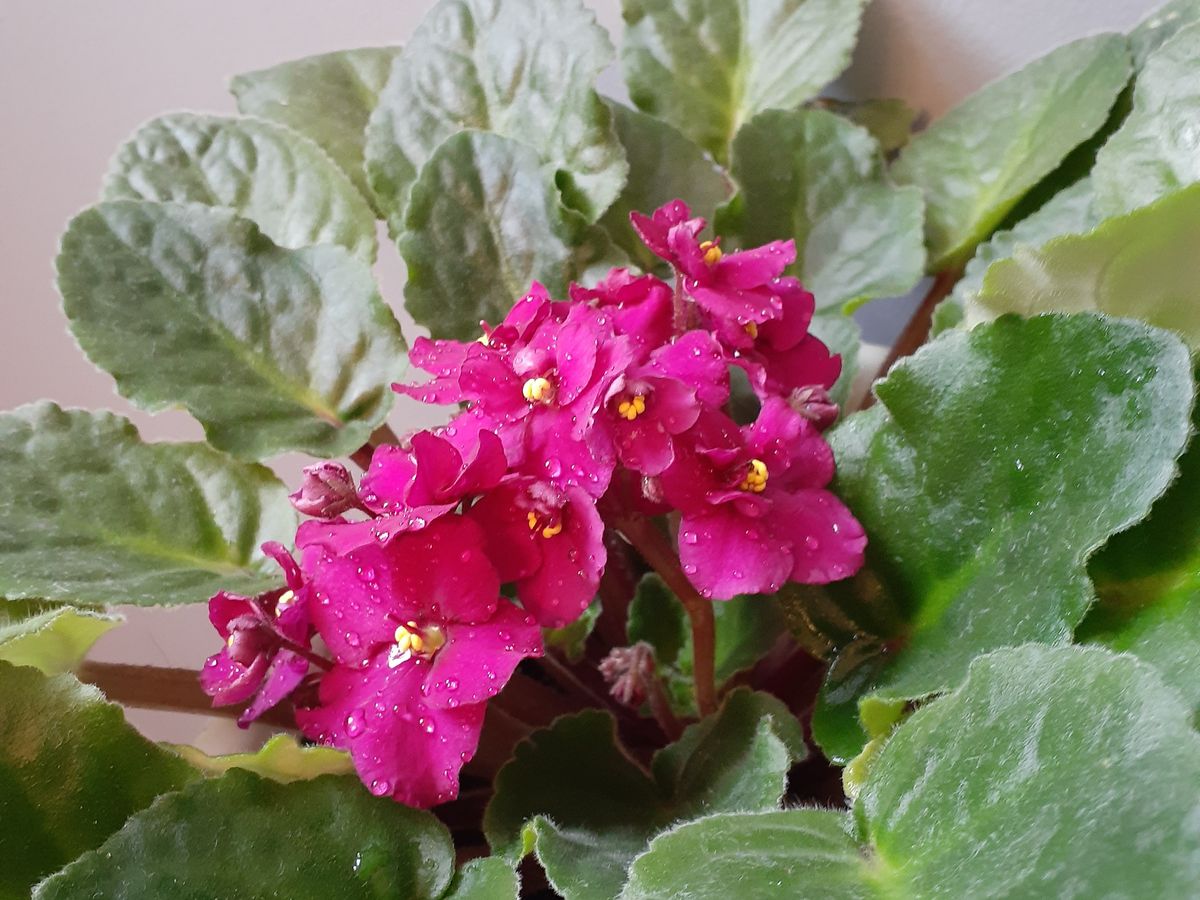
Medium light · Bright, indirect light
About once a week
Moderate
Pet-safe
Where to water it
Fill the saucer and let the plant drink from the bottom for about 30 minutes, then tip out what is left. Keep water off the fuzzy leaves.
When: When the top of the soil feels dry to the touch.
Where to put it
A bright windowsill out of direct sun, such as an east window.
Common mistakes
- Getting water on the leaves, which leaves spots
- Cold water
- Pots that are too big
African violet care at a glance
African violet care for beginners.
| Need | What to do |
|---|---|
| Light | Bright, indirect light, or 12 hours under grow lights. |
| Water | From the bottom, with room-temperature water, when the top feels dry. |
| Temperature | 65°F to 80°F. Keep above 60°F. |
| Humidity | 40% to 60%. |
| Soil | Light African violet mix. |
| Pot | Small and shallow. Violets bloom best slightly root-bound. |
| Fertilizer | African violet fertilizer at quarter strength with most waterings. |
| Pets | Non-toxic to cats and dogs. |
How to water African violets
Water when the top of the soil feels dry to the touch, usually every 5 to 7 days. Use room-temperature water; cold water leaves pale rings and spots on the leaves.
Bottom watering is the easiest method: set the pot in a saucer of water for 20 to 30 minutes, then pour off whatever it hasn't absorbed. If you water from the top, pour onto the soil, never onto the leaves or crown.
Self-watering and wicking pots work very well. A cotton or nylon wick draws water from a reservoir into a light, airy mix, so the soil stays evenly moist. Refill the reservoir before it runs dry, and flush the soil from the top every month or two to clear fertilizer salts.
Light and getting African violets to bloom
Lack of light is the number one reason African violets stop blooming. Give them bright, indirect light, like an east window or a few feet from a south or west window, or 10 to 12 hours a day under LED grow lights about 12 inches above the plants. Direct sun scorches the leaves.
To keep them flowering, feed with a bloom-boosting African violet fertilizer at quarter strength with most waterings, keep them a little root-bound in a small pot, and pinch off spent flowers. Remove any side shoots (suckers) so the plant keeps one crown.
After blooming, just keep caring for the plant normally and pinch off the old flower stalks. A healthy violet will start new buds within a few weeks.
African violet winter care
In winter, days are short and windowsills get cold. Move violets a little closer to the window or under a grow light, keep them off cold glass, and keep them above 60°F. Water a little less often, and use room-temperature water.
Common African violet problems
How to read an unhappy African violet.
- No flowers: not enough light, a pot that's too big, or not enough fertilizer.
- Pale spots or rings on leaves: cold water or water left on the leaves.
- Drooping, limp leaves: either very dry or root rot from too much water. Check the soil.
- Yellow bottom leaves: normal aging, or too much direct sun. Remove them.
- Bleached or sunburned leaves: direct sun.
- Leggy, long-necked plant: older plants grow a bare neck. Repot it deeper so the neck is buried.
- Gray, fuzzy mold: botrytis from poor air flow and wet flowers.
African violets are a cheerful choice for reception desks and residential windowsills. Leafstruck blooming plant programs keep them flowering, and we swap tired plants for fresh ones.
Blooming plant servicePropagating African violets from leaves
African violets are easy to grow from a single leaf. Cut a healthy leaf from the middle of the plant with about an inch of stem, and plant the stem at an angle in moist African violet mix or perlite. Cover with a clear bag or dome to keep it humid, and keep it in bright, indirect light.
Tiny plantlets appear at the base in 6 to 12 weeks. Separate them and pot them up once their leaves are about the size of a dime.
African violet types
All share the same care. Size changes pot size.
Standard African violet
8 to 16 inch rosettes with single or double flowers.
Care: A 4 to 5 inch pot.
Mini and semi-mini African violets
Rosettes under 6 or 8 inches.
Care: A 2 to 2.5 inch pot. They dry out faster, so check often. Great in terrariums.
Trailing African violets
Multiple crowns spilling over the pot.
Care: Don't remove side shoots; let it spread.
Optimara and Rob's violets
Popular commercial and hybrid series.
Care: Standard care. Optimara plants are bred to bloom heavily indoors.
Your African Violet watering schedule
Every 6 days · about once a week
Water from below
Fill the saucer and let the plant drink from the bottom for about 30 minutes, then tip out what is left. Keep water off the fuzzy leaves.
Check first: When the top of the soil feels dry to the touch.
Schedules are a starting point. Always check the soil before you water. Full African Violet care guide
Too many plants to keep track of? We water them for you.
African Violet questions
How do you care for African violets?
Bright, indirect light, bottom water with room-temperature water when the top feels dry, and feed with African violet fertilizer.
How often should I water an African violet?
About every 5 to 7 days, when the top of the soil feels dry.
Should I water African violets from the bottom?
Yes. Bottom watering keeps water off the leaves and crown, which prevents spots and rot.
Why won't my African violet bloom?
Usually not enough light. A small pot and regular African violet fertilizer also help.
What do I do with an African violet after it blooms?
Pinch off the spent flowers and stems and keep caring for it normally. It will rebloom in a few weeks.
Why are my African violet's leaves drooping?
Either the soil is very dry or the roots are rotting from too much water. Check the soil before watering.
Are African violets safe for pets?
Yes. African violets are non-toxic to cats and dogs.
Flowers that keep coming
Leafstruck's blooming plant programs bring African violets, orchids and seasonal color to offices and homes, maintained and refreshed for you.
Plants that like the same light
Test what you know
Water It Right game
Ten plants, two questions each: how often, and where does the water go?
GameFind the Right Spot game
Place each plant in the room where it will thrive, from sunny windows to windowless hallways.
QuizPlant matcher quiz
Answer five questions about your light, space and style to get three plants that will thrive.